The "SaaS Trap": A 5-Year Cost Breakdown
You sign up for a CRM at $50/user. Two years later, you have 20 employees, and you're paying $12,000/year for software you don't even own. Plus, they just raised prices again. Let's look at the real math for a typical Miami logistics company with 15 employees:
The Miami Logistics & Import/Export Case
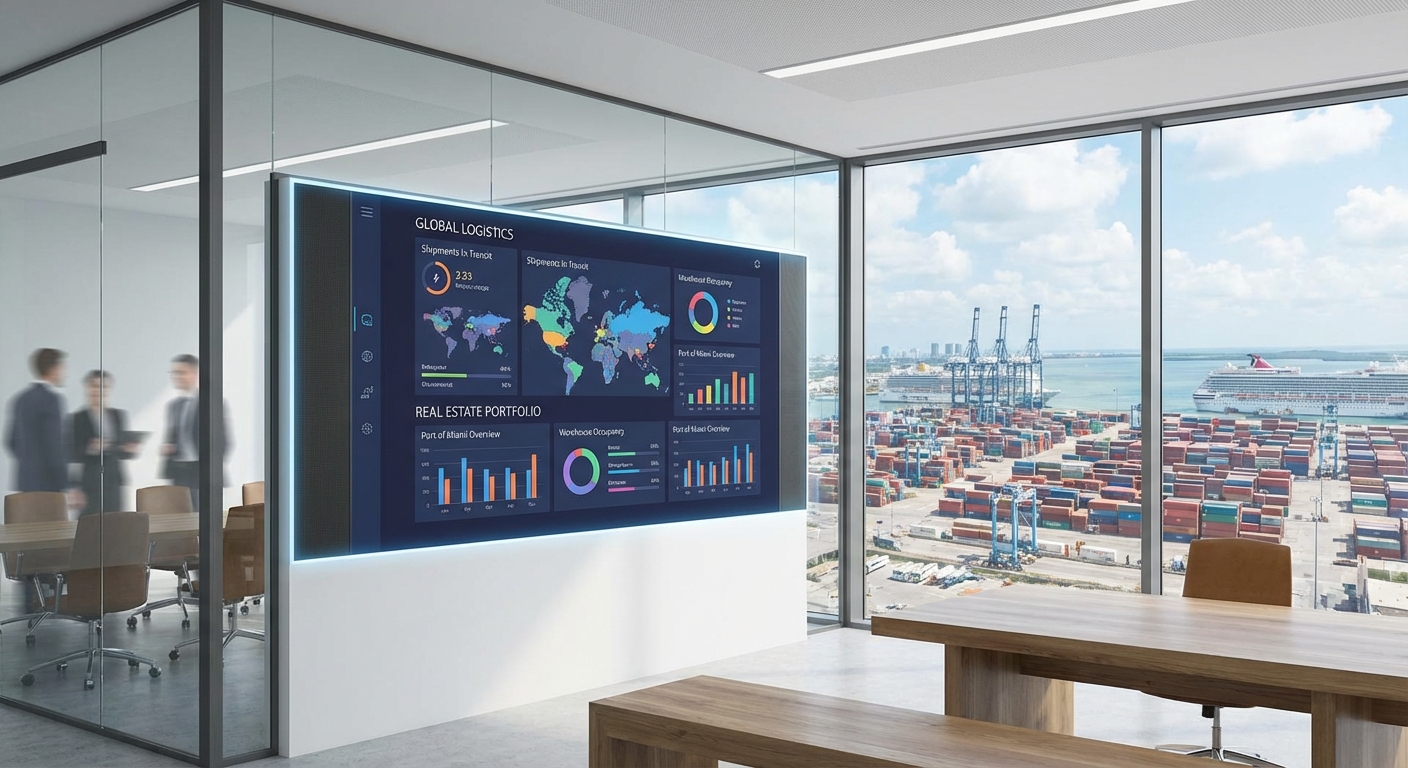
Miami is a logistics hub. Doral and Airport West are packed with freight forwarders. Generic CRMs like Salesforce or HubSpot aren't built for bills of lading, container tracking, or customs forms. I build custom logistics software that fits your exact workflow, with no per-user fees.
1. Data Sovereignty
When you stop paying a SaaS provider, you lose access to your data. With a custom solution, you host it. You own it. Your client list is yours forever. This is critical for business continuity.
2. Fee-Free Payments (Zelle/Venmo)
Most SaaS platforms force you to use Stripe or PayPal, taking 2.9% + 30¢ per transaction. On a $10,000 invoice, that's $300 gone. My custom dashboards integrate direct Zelle, Venmo, and Wire Transfer tracking, saving you thousands annually.
3. Integration with Local Services
Need to integrate with SunBiz? Miami-Dade County property records? Generic software can't do that. Custom software can. I build bridges between your CRM and the local tools you use every day.
Real World Example: Golani Security
I built a custom operational dashboard for Golani Security Services. Instead of paying for separate scheduling, inventory, and HR software, they have one unified system. See the case study here.
Build vs. Buy: The ROI Calculation
Building custom software is an upfront investment, often comparable to 1-2 years of SaaS fees. But after that? It's free. For a company planning to be in business for 10+ years, the savings are astronomical.
Stop Renting. Start Owning.
Calculate how much you're wasting on monthly subscriptions. Let's build something better.